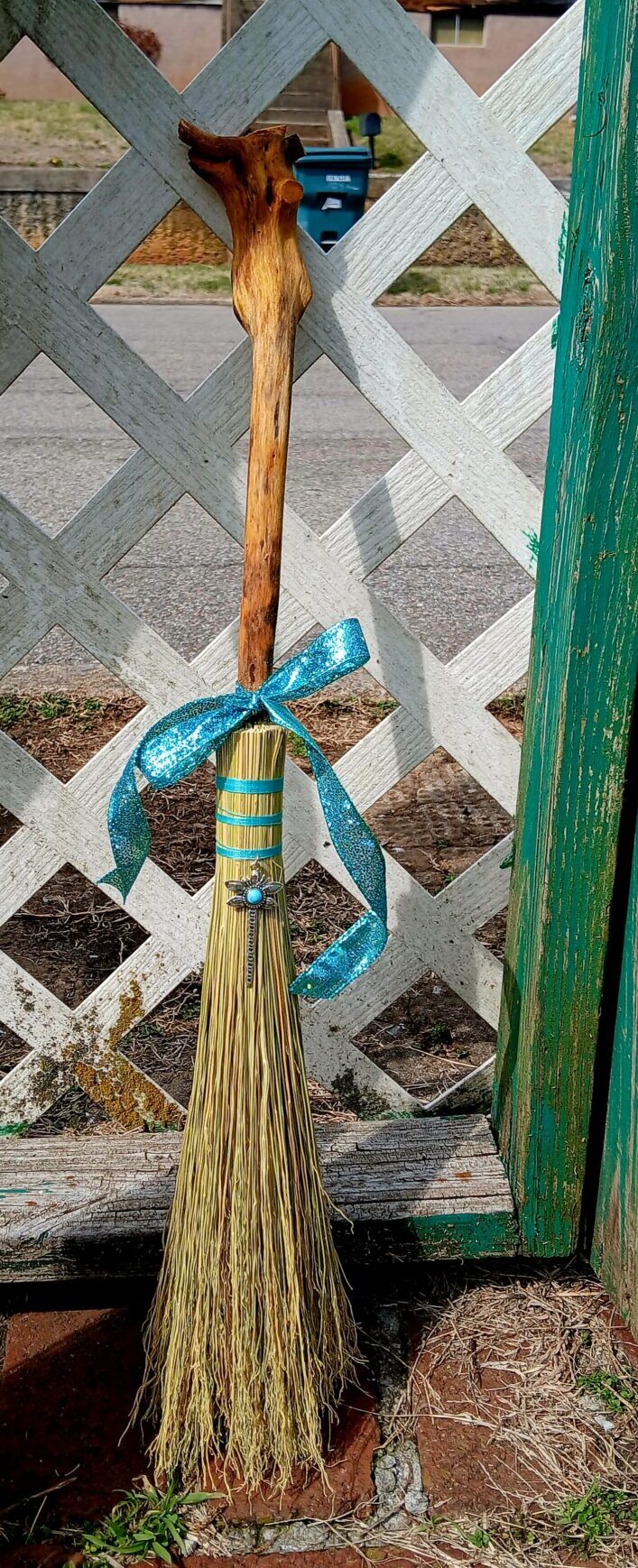
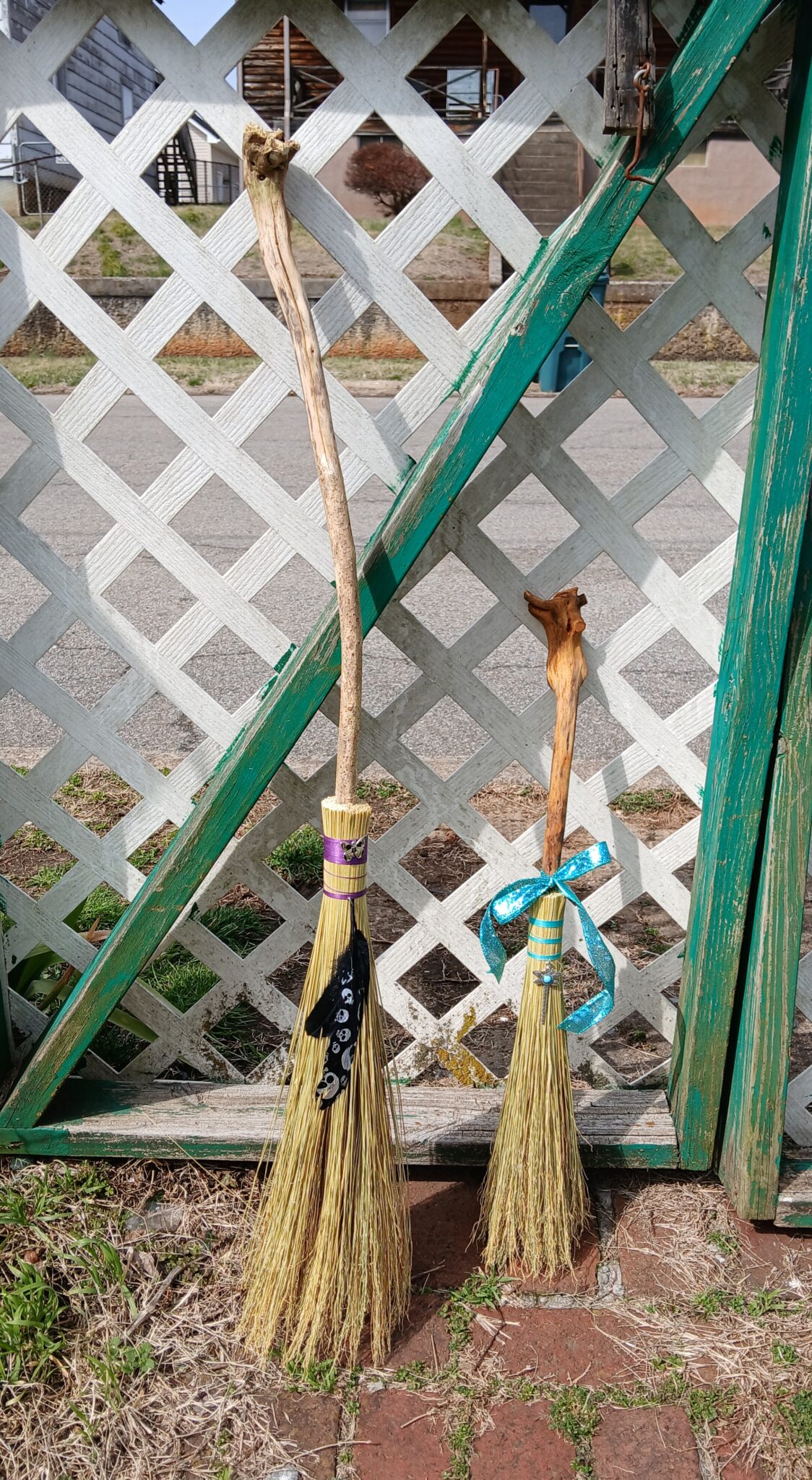
Dragonfly hearth broom
$55.00
Shipping Calculated at Checkout
1 in stock
Description
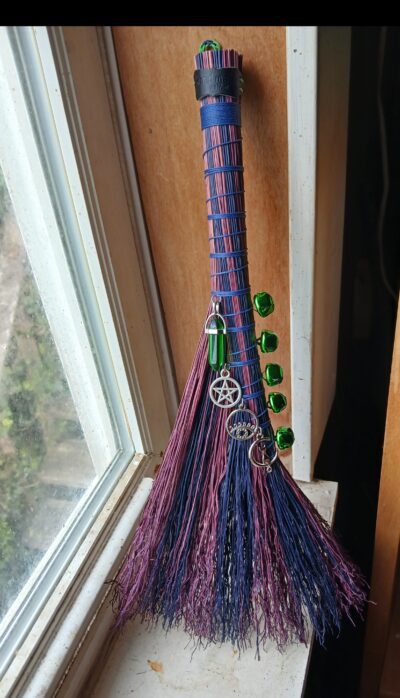
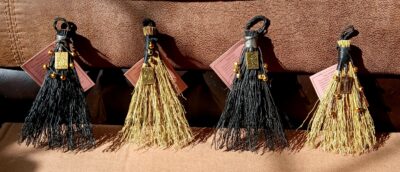
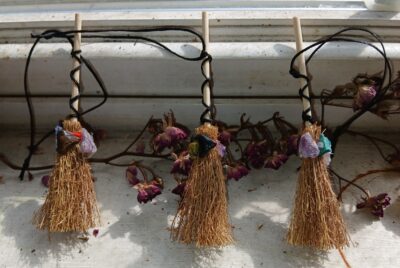
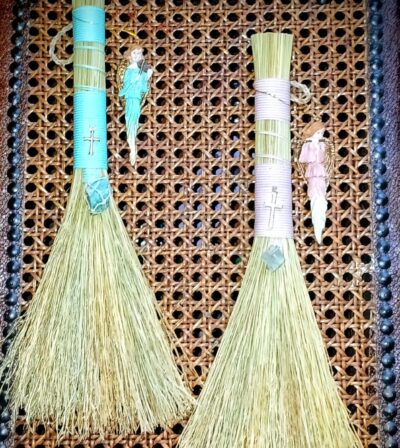
Beautiful and functional hearth broom made from undyed, natural broom corn on a tamarillo tree handle. Featuring a dragonfly pendant with genuine turquoise stone with matching waxed hemp cord and sparkly ribbon.
Seller Information
My Sister's Sweeper
Bristol, VA
About My Sister's Sweeper
I'm the crone behind the broom at My Sister's Sweeper . My business is technically hand crafting brooms but it's also so much more than that. It's a connection to my grandmother, mother in law and ancestors as they also crafted brooms by hand. My grandma out of necessity and my MIL for the Mormon community she grew up in. It's learning traditional Appalachian skills and keeping them alive. It's teaching others those skills so they aren't lost to time. It's an homage to women and all the ways they lift each other up daily and help clean up life's messes, literally and metaphorically. I know I wouldn't be where I am today without my sisters beside me. The name is actually a play on 'my brother's keeper'. My motto is "brother's have keepers, sister's have sweepers"! The brooms are made of natural broom corn (a variety of the sourgum plant) and tied with love, intuition and intent. Not only are they beautiful art, they are functional tools for home and hearth. Who said housekeeping has to be boring?! I welcome custom commissions and I have a little online shop where you can find the brooms that are ready to fly through the link on my page. Long before the broom became a Halloween symbol, it was a sacred household tool — a bridge between the everyday and the enchanted.
In the old villages of Europe, the hearth was the heart of the home, and sweeping was more than tidying. It was ritual. Each stroke of the broom cleared not only dust, but energy — brushing away stagnant spirit, grief, or misfortune. Women would sweep their thresholds at dusk, whispering small prayers to keep harm away and invite good fortune in. It’s said that the first “witch’s broom” was born not from flight, but from intention. During the festivals of spring and autumn, women would dance through the fields beneath the moon, straddling their brooms as they leapt and circled — not to fly, but to bless the soil, calling fertility and renewal into the land. The broom itself was a symbol of harmony: the handle for strength, bristles for purification, bound by cordage for flexibility — masculine and feminine joined in sacred balance. Over time, these moonlit dances were misunderstood. The image of women “riding” their brooms through the night twisted into fear and superstition. Thus the legend of the flying witch took root — a distortion of something once holy. But beneath that shadow lies an older truth. These were Wise Women — healers, midwives, herbalists — whose power was found in care, intuition, and connection with the living earth. The broom was never a symbol of wickedness. It was a tool of protection, transformation, and boundary. Before rituals, they would sweep the space clean — not to erase, but to prepare. To make the ordinary sacred. A broom placed by the door guarded the threshold, just as a candle still lights the way for prayer. In folklore, the broom is a sign of liminality — of standing between worlds. To leap over it is to cross a threshold, to step into a new chapter. (Even now, “jumping the broom” in wedding rites carries that same blessing of transition and union). So when you see the witch with her broom silhouetted against the autumn moon, remember —
she is not fleeing.
She is rising.
She is dancing between worlds, sweeping the path between them clean.
The broom was never meant to frighten. It was meant to bless.